10 Days in Guatemala - Is it enough? Yes!
[seek⌁mas] 23-minute read ⌁ September 24, 2026
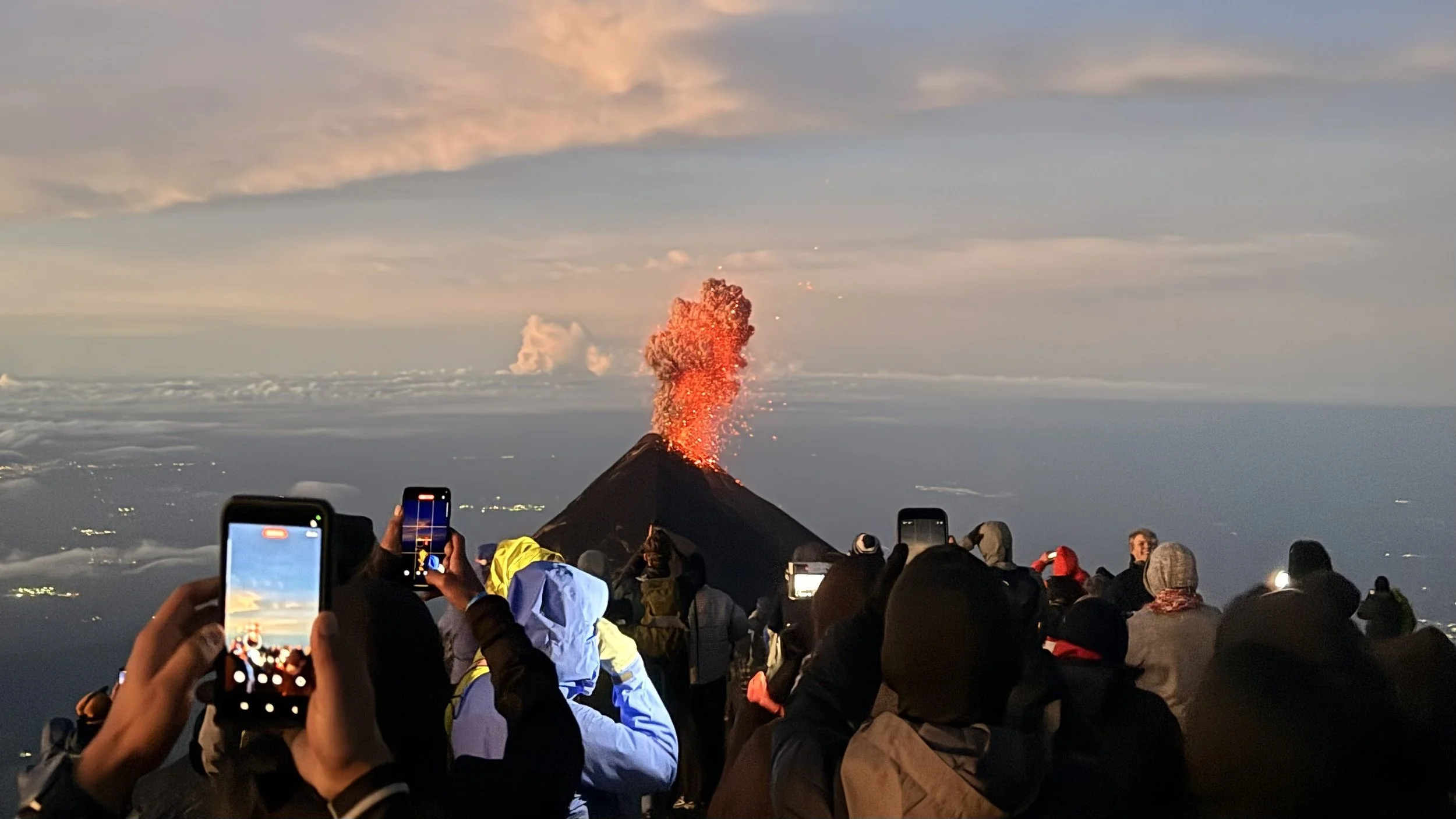
Active Volcano Hikes, Lakeside Villages, Black Sand Beaches: Welcome to Guatemala
It’s September 2026, and I just returned from a solo trip to Guatemala. I was able to check hiking an active volcano off my bucket list, meet some new friends, practice my Spanish, and create memories that will stand the test of time. Below, check out my 10-day itinerary!
10-Day Itinerary Breakdown for a Safe Guatemala Solo Trip
~ Days 1–4: Antigua ~ Days 5–6: Lake Atitlán ~ Days 7–8: El Paredón ~ Days 9–10: Guatemala City
~ Days 1–4: Antigua ~ Days 5–6: Lake Atitlán ~ Days 7–8: El Paredón ~ Days 9–10: Guatemala City
Days 1–4: Antigua Days 5–6: Lake Atitlán Days 7–8: El Paredón Days 9–10: Guatemala City
The Best Ground Transportation Options
Shuttles: This is your bread and butter for long hauls between Antigua, Atitlán, and the coast. They are direct and keep your bags secure, somewhat. Pro tip: Use my Bookaway code GT7AXX to save $10 on your first booking.
Uber (Cost: 25-100 GTQ): Low-cost, safe, and highly reliable. I rely on this heavily for airport transfers and navigating Guatemala City without the guesswork of haggling.
Tuk-Tuks / Motor Taxis (Cost: 10-35 GTQ): Your go-to for short hops around Antigua or the lake villages. They are loud, the drivers always have good Latin music playing, and it’s a raw, open-air way to take in the streets.
Boats / Lanchas (Cost: 10-30 GTQ): Essential for village-hopping across Lake Atitlán. They are bumpy and quick—make sure your camera is secured in a dry bag before you step on board—you will get wet. Pro tip: Sit closer to the back of the boat for a less bumpy ride.
The Worst Ground Transportation Option
Chicken Buses (Cost: 3-50 GTQ): Let’s keep this simple: it’s your life or your belongings. While these repurposed, intensely painted school buses look incredible on 35mm film, actually riding one with your passport and thousands of dollars in gear is an unnecessary risk. Shoot them from the street, but skip the ride.
Communication & Connectivity
Spanish is the primary language spoken in Guatemala. A little effort goes a very long way. Before you land, practice on Duolingo, take some Spanish classes, or find a local language exchange. For me, a massive part of traveling to Spanish-speaking countries is putting in the work to blend with the culture, not stand out as a tourist. When you speak the language—even brokenly—the walls come down, and you get much more authentic interactions, as well as better prices.
For staying online, you have a few solid routes:
The Physical SIM (The Ground Game): I picked up a physical SIM card right at the airport. I run it on an old iPhone XR that I use specifically as a dedicated travel device. I went with the Claro network—it gave me hotspot capabilities so I could tether my laptop and iPhone 16 Pro to work on the fly, with enough data to cover a 15-day stretch. Cost: ~300 GTQ—well worth it.
eSIM (The Pre-Planner Route): If you prefer having your logistics locked down before you even board your flight, an eSIM is your best option. Providers like Holafly (or Saily, which I've pitched and vetted for travel) let you activate your data the second your plane hits the tarmac.
Portable Wi-Fi (Ryoko Pro): If you are traveling with multiple devices—laptop, secondary phone, tablet—or running a remote workspace on the go, a portable pocket router like the Ryoko Pro is a clutch alternative. It’s a dedicated 4G LTE mobile hotspot that lets you connect up to 10 devices simultaneously without draining your primary phone's battery via hotspot. It charges via USB-C, gives you around 8 hours of battery life, and runs on prepaid local or global data plans so you stay completely off risky public Wi-Fi networks. It's an ideal choice if you're editing photos or working while moving between café setups. Check it out here!
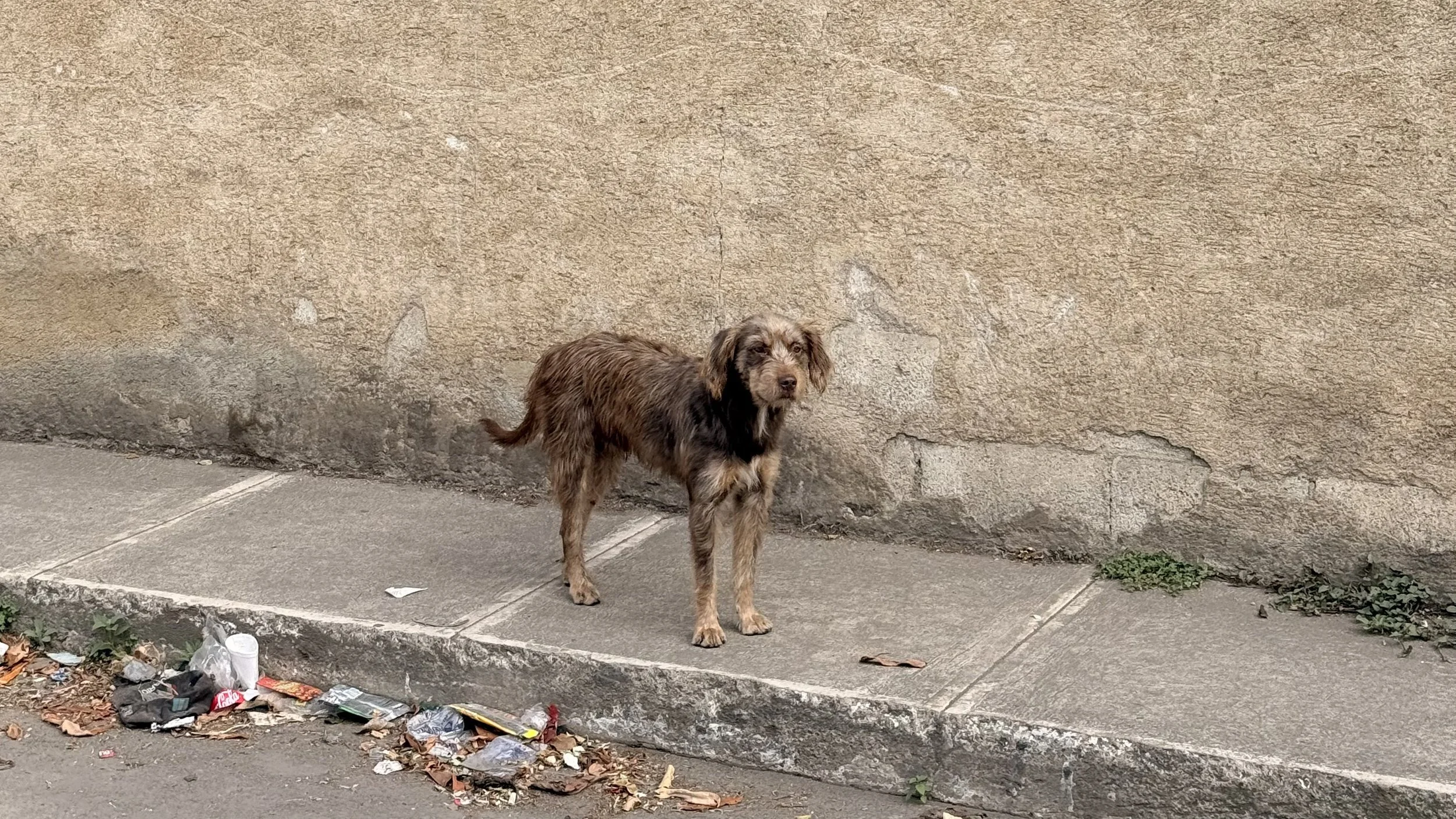
The cobblestone streets of Antigua, Guatemala
Volcano Views & Adventure: Framed by three prominent volcanoes—Volcán de Agua, Acatenango, and the actively erupting Volcán de Fuego—Antigua serves as the world's primary launching pad for high-altitude volcano hiking and overnight treks. Friendly street dogs everywhere!
Day 1: Airports & The Road to Antigua
My trip began at 5:00 AM in Mexico City, grabbing an Uber from my Condesa Airbnb “Casa Lola” to Mexico City’s Benito Juárez International Airport for a direct flight to Guatemala’s La Aurora International Airport (GUA). Instead of lingering in the capital, I booked a direct shuttle to Antigua via GetYourGuide to get straight into the highlands.
I checked into my Airbnb, ペンション田代 - a small, Japanese-owned spot that felt immediately like home. After dropping my bags, I hit the cobblestones to scout the area. First stop was La Bodegona, the local supermercado, to grab water and snacks for the room. I hit a local ATM to pull some cash afterward; you'll want physical quetzales on hand for the smaller vendors ($1 USD to ~7.7 GTQ).
As nightfall approached, I skipped the tourist traps and found exactly what I was looking for: Pupusas at Maria’s. This is a hidden, 5-star local gem with 64 reviews. It’s essentially a small home restaurant where I spent an hour chatting in broken Spanish, watching Maria cook thick, savory pupusas on a small propane stove right in her garage. It’s the kind of raw, authentic, cultural immersion I travel for.
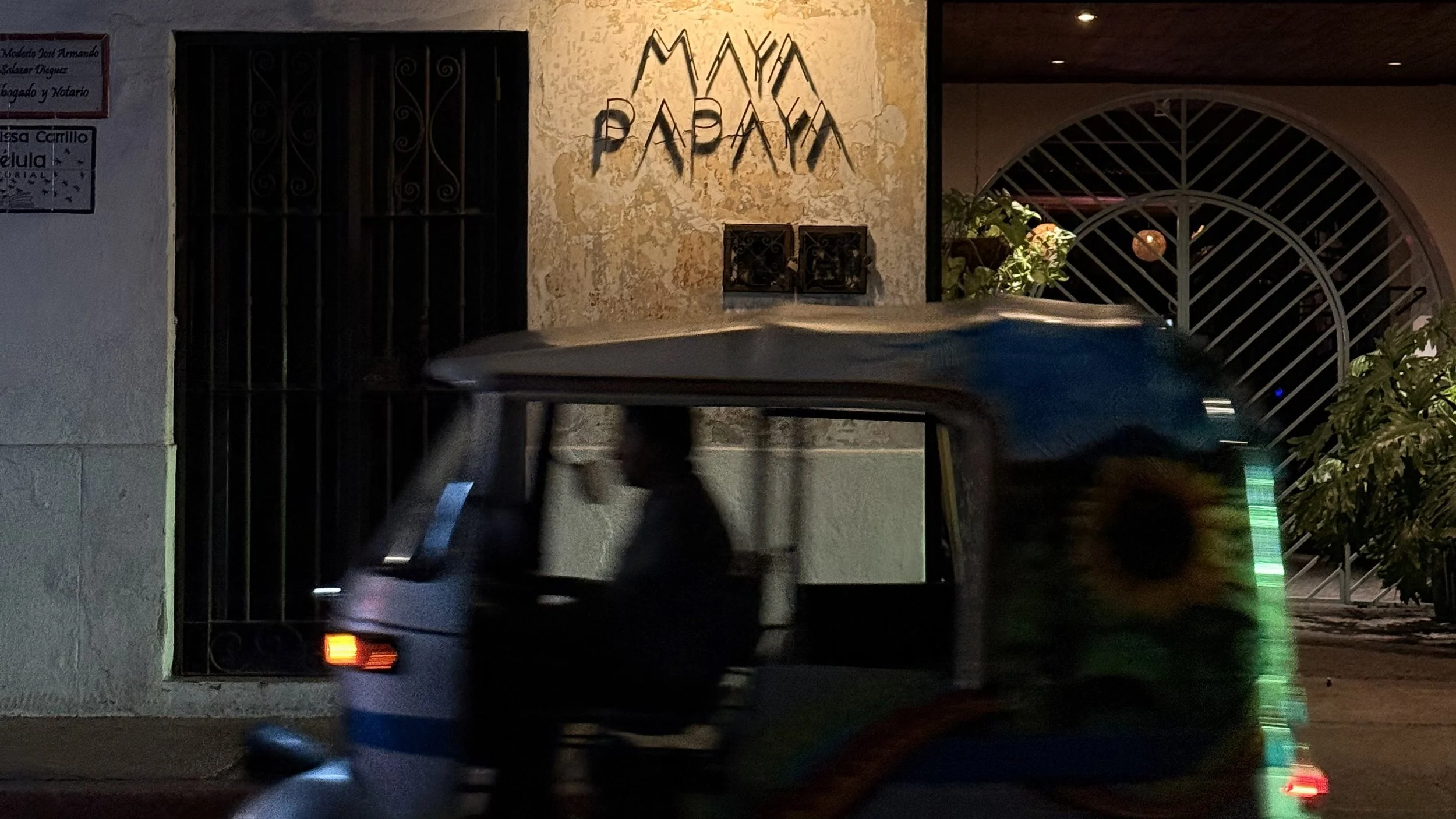
The local taxi, the tuk-tuk
Equal parts lawnmower and roller coaster, tuk-tuks are the beating, three-wheeled heart of Guatemalan street travel. Squeezing down colonial cobblestones and roaring up dusty highland dirt tracks, these open-air, loud-motored taxis don't just get you from point A to point B—they give you a front-row seat to the country's raw, unfiltered energy.
Day 2: Antigua On Foot
I was up early to beat the crowds, grabbing breakfast at Unión Café (an exceptional spot with 5-star ratings for its local coffee and atmosphere). It’s a cool, aesthetic space with great service, made even better by a sleepy neighborhood cat that sat next to me for my entire meal.
Fueled up, I headed to Convento Santa Clara (rated 4.7 stars for its stunning 17th-century ruins). The crumbling architecture and natural light make it a dream for 35mm photography, and I managed to snap some incredible shots while a local wedding was being set up in the courtyard. From there, I walked through the narrow streets as loud chicken buses blew past, pushing exhaust into the air, and made my way up the hill to Cerro de la Cruz for a panoramic view of the whole city.
Walking back down past a pack of street dogs, I stumbled upon a boutique hotel with a cool outdoor setup called The Garden Cafe. They had a sign claiming they accepted Bitcoin. I asked to pay with crypto, but the girl at the register admitted it was her first week and she had no idea what Bitcoin was. I paid in quetzales and enjoyed a perfect cappuccino with a garden view.
It was time to lock in the main event. I walked over to the adventure tour company, Blue Sky Adventure, rated highly on Google Reviews and with a well-designed website. After getting lost and confused on the colonial grid, I finally found their storefront. I told them I wanted to hike the volcano tomorrow. They gave me a 10% discount and ushered me right into a safety meeting that was just starting. I signed the waiver, paid, was issued a 60L backpack, and got scheduled for a 7:00 AM departure to the trailhead at Soledad. My group was a mix of 14 strangers from the USA, Mexico, Colombia, Argentina, the Netherlands, Korea, and Guatemala—soon to be my new trail family.
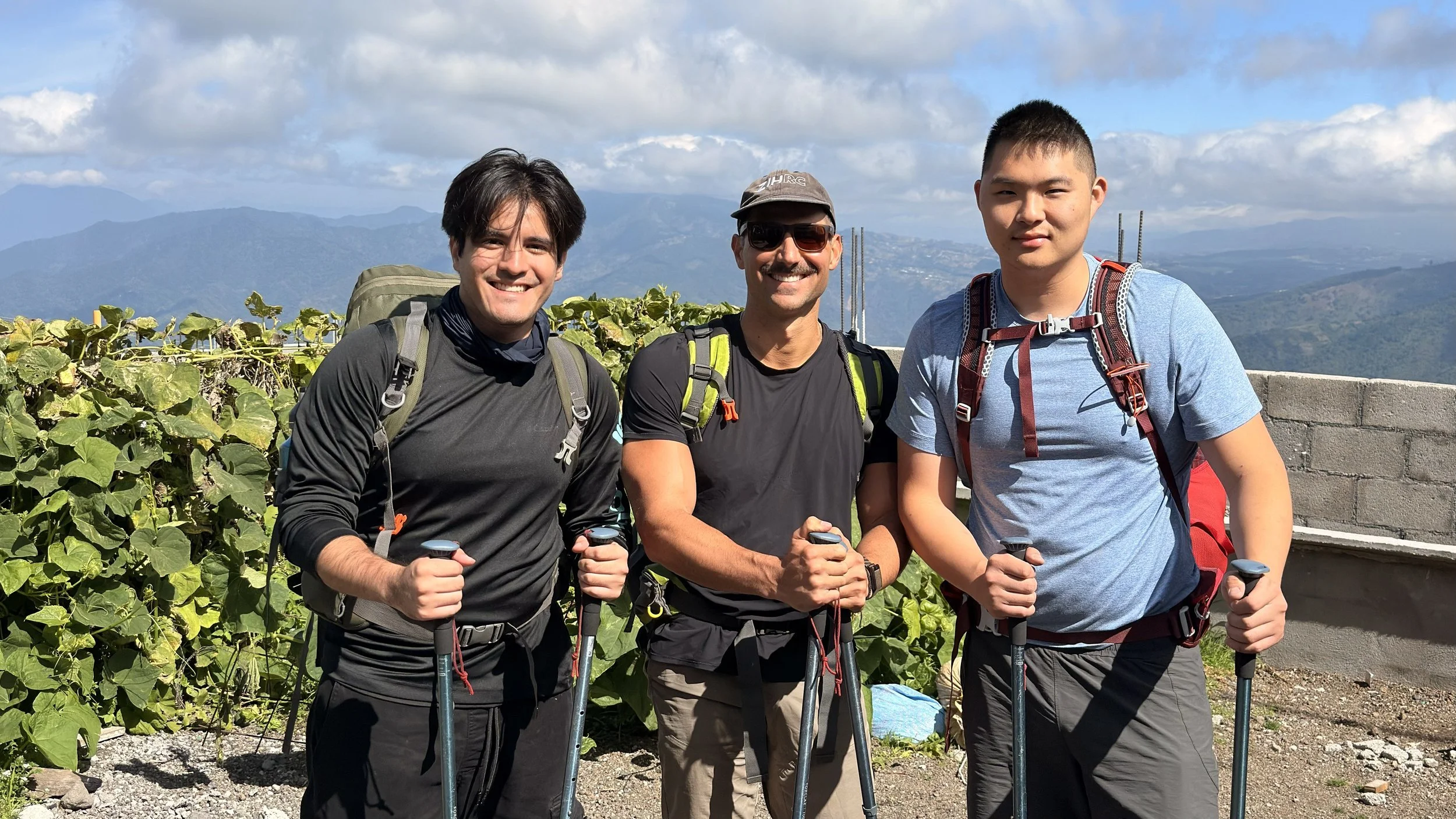
Mexico, the United States, and Korea represented in Soledad
Hiking Volcán Acatenango is not a casual trail day; it is a relentless 5-hour physical test. You are grinding through 5 miles of deep volcanic ash to conquer over 5,000 feet of vertical elevation gain—but standing at 13,044 feet watching Fuego violently erupt makes every vertical step worth it.
Day 3: The Acatenango Ascent & The Fuego Storm
We woke early, walked to Blue Sky for a quick breakfast and gear try-on, met our guides, and piled onto a bus to Soledad. The hike is a beast. We pushed upward, passing stray dogs, pack horses, and a mix of hikers carrying varying extremes of equipment. After nearly 5 hours and roughly 5 miles (8 km) of steep, relentless vertical ascent, we finally made it.
Acatenango Basecamp
Basecamp is a cluster of well-insulated wooden shacks, primitive outhouses, and a covered meeting area centered around a large wooden table. Through the rolling clouds, we got our first glimpse of Volcán de Fuego erupting in the distance. It was a literal dream come true.
Here, the group split: four chose the comfort path (a well-deserved nap in the cabins), while ten of us opted to tackle the extra 4-hour hike to Fuego. We had no idea what we were in for…
The descent toward the saddle was treacherous. I was slipping and sliding in my Brooks running shoes—a massive mistake, as they should never be used for this type of hike. We made it to the base of Fuego, the only tour group in sight amongst a few scattered tents. Then, it started to rain. Pro tip: Always rent the boots, backpack, trekking poles, rain gear, and extra warm clothes. On a volcano at altitude, conditions change rapidly. Money will come and go, but you’ll always remember an experience like this—don’t be cheap.
We grabbed ponchos and jackets, taking cover under the trees as Fuego violently erupted above us. The rain got angrier and heavier. We stopped to regroup, and our local guide, Estrella, took a vote: we would keep going after the rain calmed. It did, but 20 minutes later we were regretting the decision. The rain intensified, and the trail turned into a literal mudslide. Rocks, small shrubs, and a river of water rushed down the meandering switchbacks. We were trapped. People began to panic, and the guides finally called it: "Let's return, don't fall, please." We scurried down the hill, completely unaware at the time that we were only 15 minutes from Fuego's summit.
We survived the scramble back to the base of the saddle as the rain finally let up and a glimpse of sunlight broke through. On our hike back to basecamp, 20 to 30 tour groups passed us, asking about our experience. Disappointingly, we had to tell them we didn't make the top due to weather conditions. As we hiked, we heard and watched Fuego erupt repeatedly. My mission, my bucket-list item—I came so close, but God had other plans.
The hike back broke people. Hikers began to slow down—dehydrated, cramping, dead tired. I gave out whatever I had left: electrolyte tablets and snacks. By the time we arrived back at camp, we were soaked, freezing, and starved. The four who stayed back talked about the amazing naps they had under the tin roofs with the rain falling overhead. We were greeted with no fire—the wood had been left outside and was drenched—but we did get hot spaghetti and meatballs.
That night, we stayed up watching the flames and lava of Fuego erupting in the distance like a bomb blast every hour. The night itself was rough; all my clothes and backups were soaked, and the wooden cabins had no electricity or way to dry our gear.
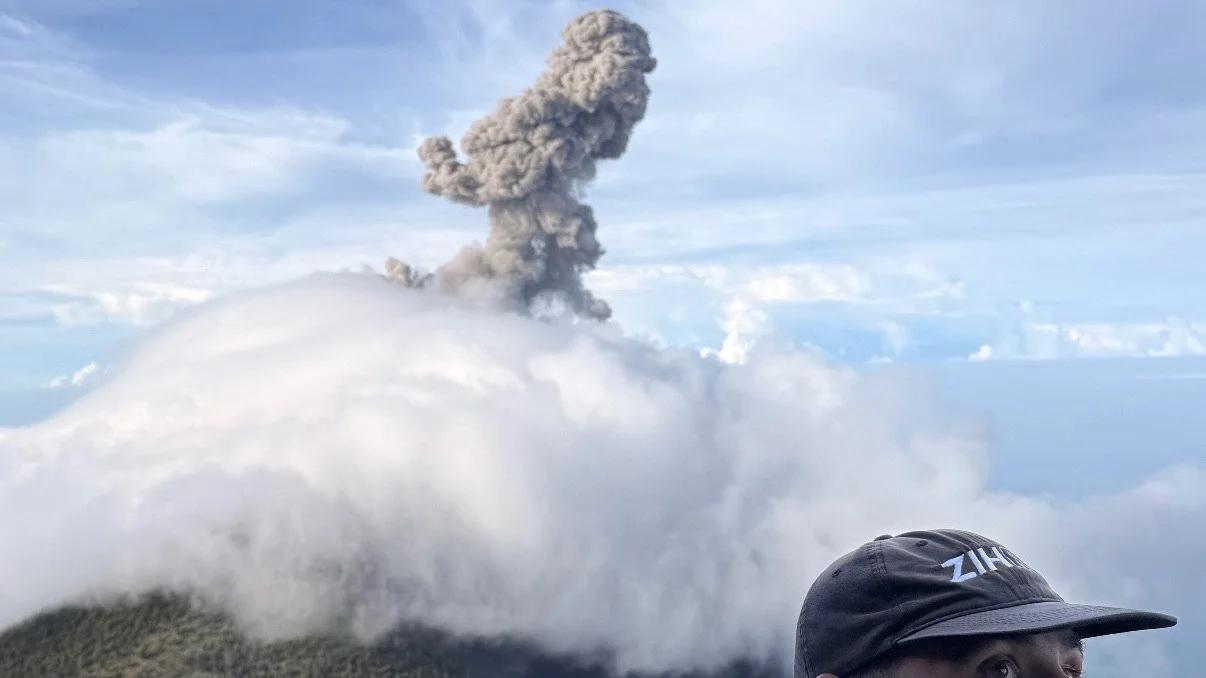
Eruptions Like Bombshells
When Fuego goes off, it doesn't just rumble—it detonates like a bombshell. The deep, artillery-like sonic booms are so powerful that the noise easily travels over 10 miles (16 km) to rattle the glass windows of colonial homes down in Antigua. During heavier explosive phases, the low-frequency blasts can carry over 30 miles (50 km), echoing all the way into the concrete grid of Guatemala City.
Day 4: The Summit & The Descent
At 3:30 AM, we woke up in the freezing pitch black to summit Acatenango. "Manche," the loyal camp dog, followed us as we pushed through an hour-long, steep scramble in the dark.
We reached the summit just in time for an amazing sunrise. We stood with hundreds of others, watching Fuego erupt as someone set off fireworks overhead, all while lightning flashed in the far distance. Stray volcano dogs wove through the crowd, seeking warmth from the legs of strangers.
We made it back down to camp quickly, housed a pancake breakfast and coffee, and started the long hike down. It was a blur of running, racing, and sliding our way back to Soledad. We piled into the same bus with the same driver and headed back to Antigua.
After paying the remaining fees for the failed Fuego hike and turning in my backpack and trekking poles at the tour shop, I was exhausted. Tired, dirty, and heart-full, I walked back to my Airbnb for an amazing, life-changing hot shower, followed by a massive nap.
Once I woke up, I grabbed a quick bite at Cafe Boheme to plan the next leg of my trip to the lake. That evening, I walked to the most beautiful McDonald's in the world, with its stunning colonial courtyard and gardens, and spent the rest of the night sitting in Parque Central de Antigua Guatemala, just watching the locals go about their evening.
An amazing four days, well spent.
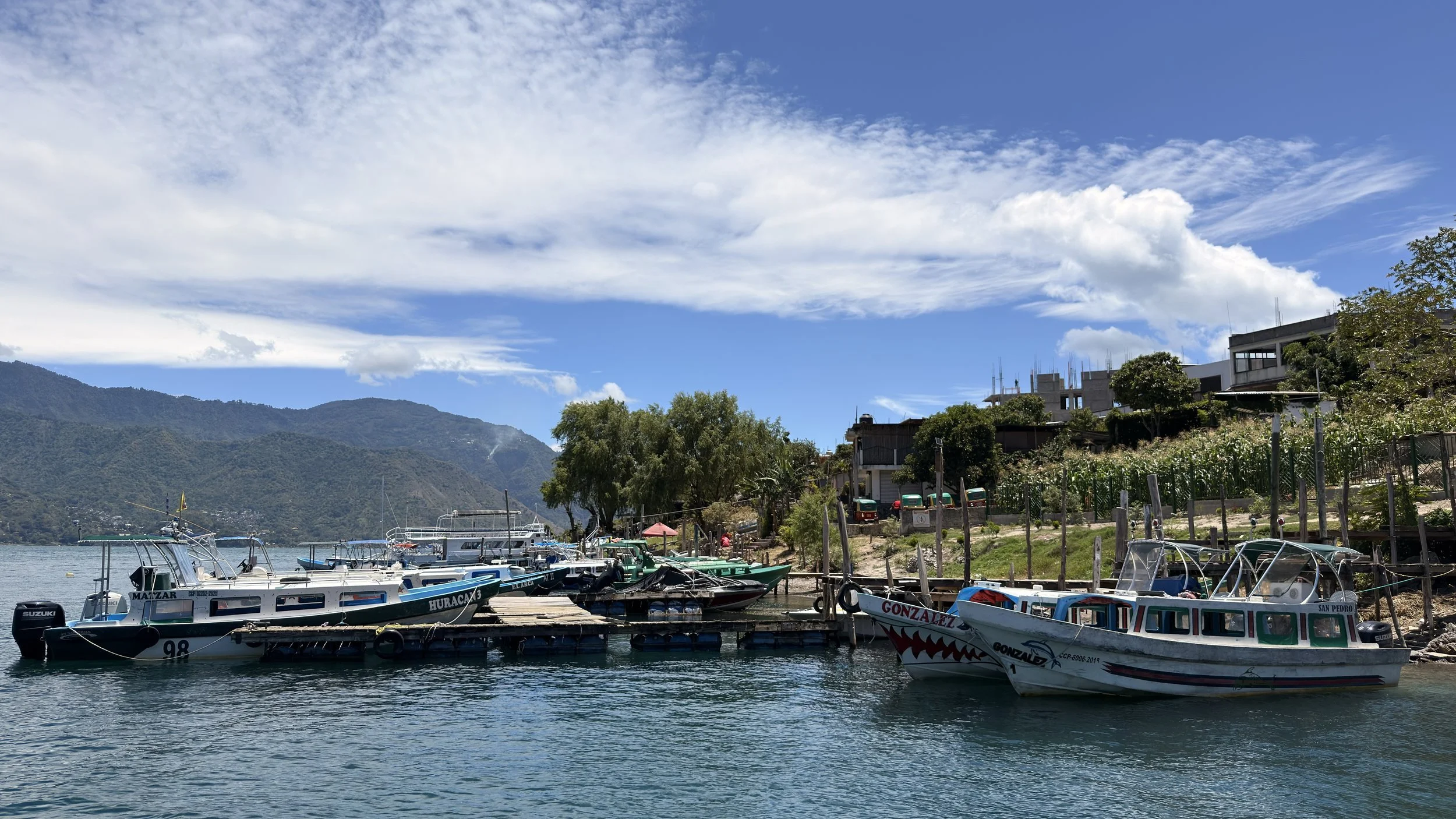
Lake Days are the Best Days in Guatemala
While California's Lake Tahoe is nearly four times larger in sheer size, Guatemala's Lake Atitlán trades those freezing alpine temperatures for a highly swimmable 70-degree year-round average. If you are chasing raw highland aesthetics without the frigid shock of the Sierras, this deep blue volcanic crater lake delivers an unbeatable, warm-water sanctuary.
Day 5: The Shift to Lake Atitlán & San Pedro
Day 5 started early. I grabbed a tourist shuttle through Bookaway for the long, four-hour haul out of Antigua toward San Pedro La Laguna. We rode with a few other travelers, making quick bathroom stops at roadside gas stations before finally rolling into the tour company’s post office in San Pedro. The moment we stepped off the bus, we were swarmed by tuk-tuk drivers trying to secure a fare. Thanks to a little pre-trip research, I knew the going rates and used some negotiation tactics to get a fair price down to my Airbnb on the lakefront.
The place was a bit farther out than I had originally mapped, but it was a beautiful stay. When I arrived, a pack of local street dogs greeted me at the gate as I punched in the combination to enter. The view of the lake from the room was incredible—deep, moody blue water framed by the surrounding volcanoes. I spent the first hour unpacking, getting my hotspot connected, and knocking out a bit of website copy and coding with Claude Code to keep my startup app moving. Once the laptop was shut, it was time to venture out.
I walked the steep, winding streets, passing a rugged local gym before my hunger took over. It wasn't Friday, but the craving hit, so I stopped into Pizzeria El Callejon. The owner and the staff were all Italian, bringing authentic, thin-crust pizza to the middle of the Guatemalan highlands. I paired a massive pizza with a cold agua de jamaica and watched the locals enjoying a few cervezas.
Fueled up, I continued my walk as it started to get dark and found the local church at Nuevo Parque San Pedro La Laguna. The plaza had an amazing weathered fountain with a statue of San Pedro himself. Kids were running wildly through the courtyard, throwing balls at each other in the fading evening light. It was one of those raw, cinematic moments that looks perfect captured with a warm, muted palette—just pure, simple, local life.
Since it was fully dark by the time I headed back to the house, I decided to drop into San Pedro Gym, the spot I had passed earlier. I keep a pretty strict daily training routine, and while it’s a far cry from the modern setups I use back in California, there is nothing like the energy of these foreign local gyms. It was a primitive setup: faded bodybuilding posters of Ronnie Coleman and Arnold Schwarzenegger taped to the walls, rusted iron plates, and locals just getting after it. I pushed through a quick, heavy session and walked back out into the cool night air looking for anything open for a bite to eat. I settled on a few high-protein yogurt drinks at a local tienda and continued the trek.
I arrived back at the Airbnb, took a much-needed quick shower, and was greeted on the patio by the white house cat. Before crashing for the night, I opened up my laptop and booked my next stay just across the water in San Marcos La Laguna for the very next day.
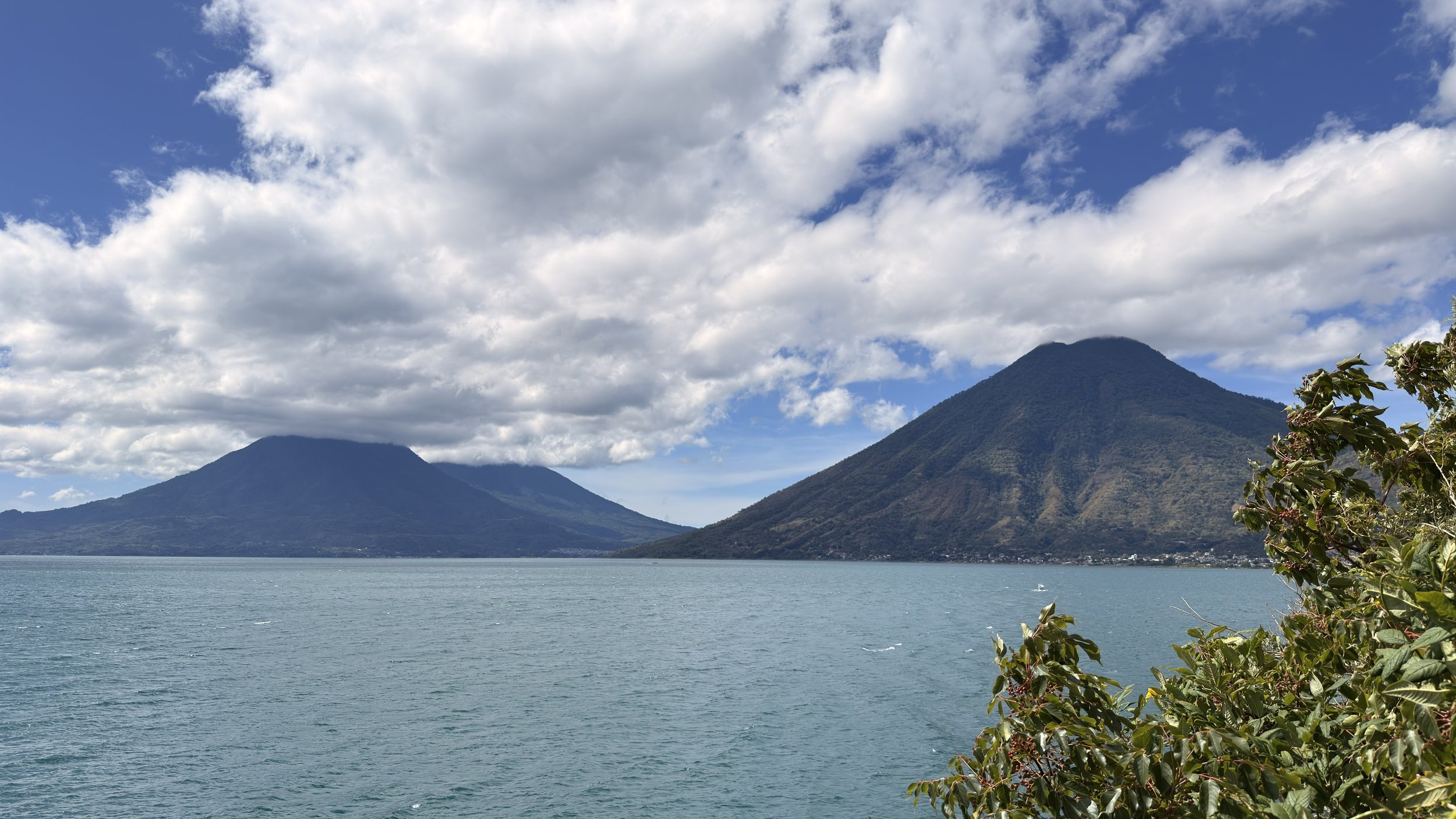
San Marcos La Laguna, Lake Atitlán
Known worldwide as a spiritual and holistic sanctuary and famous for its bohemian energy, transformative yoga retreats, sacred cacao ceremonies, and alternative healing culture, this is San Marcos. From navigating its narrow, car-free footpaths flanked by lush greenery to cliff jumping into crystal-clear volcanic waters at Reserva Natural Cerro Tzankujil, this serene village is the ultimate haven for wellness seekers, conscious travelers, and solo adventurers.
Day 6: The Move to San Marcos La Laguna
The early bird gets the worm. I didn't quite make it out for sunrise, but the early morning view of the lake from the roof was still incredible. I grabbed a quick breakfast at Orbe Cafe, packed my bags, showered, and hailed a tuk-tuk down to the dock.
I paid 25 quetzales for the public lancha (boat) to San Marcos. While waiting on the dock, I struck up a conversation with two guys from NYC who were planning to tackle the Acatenango and Fuego hike the next day. I didn't hold back—I told them my story of getting trapped in the mudslide and gave them some serious advice: bring heavy rain gear, pack extra warm clothes, and bring more dry socks than you think you need. We jumped in the boat and were on our way.
Hitting the San Marcos dock, I started walking and was lost within 10 minutes on the winding, narrow footpaths. I had to ask locals for directions and eventually messaged my host before finally arriving at Casa Alegria. It’s a solid two-story home with a few rooms and great views of the crater lake.
I settled in quickly and hit the streets, walking past locals selling handmade jewelry, textiles, and other handicrafts. After working up an appetite, I took a long walk up a steep hill to Burrito House y Tio Lio Kaphe. The climb was worth it for the elevated views and great food. Afterward, I headed back down the hill for a cappuccino and a smoothie at Circles Cafe & Bakery. The spot has a cool, tropical concrete atmosphere that immediately threw me back to my days traveling and shooting in Bali and across Indonesia.
I headed back to the Airbnb, opened the laptop, and spent the afternoon knocking out some digital marketing projects and agency work. Later, I walked down by the lake to catch the sunset before hitting a quick session at L&N Gym, where I had the entire place to myself. I returned for a quick shower and went hunting for dinner. Several spots that claimed to be "open" had unfortunately closed early, so I ended up grabbing food at Happy Taco. Day 6 in the books.
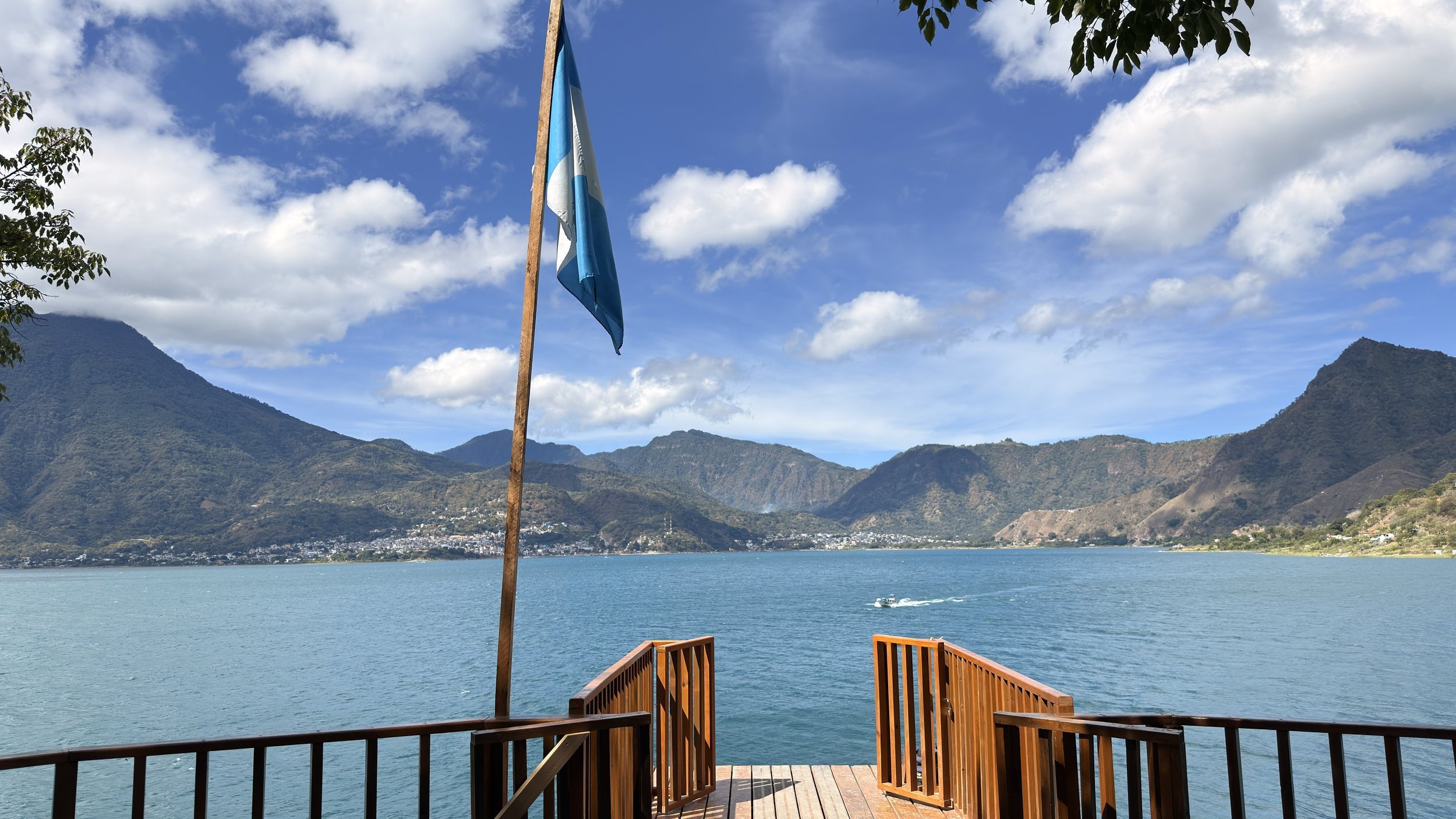
Reserva Natural Cerro Tzankujil
If you think jumping off the 12-meter platform at Reserva Natural Cerro Tzankujil looks easy from the shoreline, stepping up to the wooden ledge high above Lake Atitlán will make you think again. Hovering nearly 40 feet over the volcanic waters in San Marcos La Laguna, this iconic cliff-diving spot turns a quiet morning swim into a high-adrenaline test of pure nerve. The ultimate wake-up!
Day 7: Cliff Jumps & The 8-Hour Journey to El Paredón
The day started early, and in the most amazing way possible. Before leaving San Marcos, I headed straight to Reserva Natural Cerro Tzankujil. For a 40-quetzal entry fee, you get access to pristine cliff diving spots right on the crater lake.
Getting there between 7:00 and 8:00 AM is the move—there was zero crowd, the morning sun was warming up, and the water was dead calm. The reserve has a massive 12-meter wooden platform and several smaller rocks to jump from. I stuck to the smaller jumps, swam in the deep blue water, and encouraged a few brave locals and travelers to launch themselves off the towering 12-meter drop.
Running short on time, I hurried back to the Airbnb for a quick shower, packed my bags, and rushed down to the dock to catch a lancha across the lake to Panajachel. I had about 30 minutes to kill before my shuttle arrived, so I walked the main street of Pana and bought a few handmade bracelets and small woven bags from an elderly woman.
Luckily, I was the first pickup for the shuttle heading to El Paredón, which meant I secured the coveted front passenger seat for the massive 8-hour journey, complete with my own AC vent and USB charging port. The rest of the van eventually filled up, primarily with French Canadians who spoke no Spanish, and we embarked on the long, winding descent from the cool volcanic highlands down toward the humid Pacific coast.
Just when we thought we had finally arrived, the route threw a curveball. The van pulled up to a military guard gate and drove straight onto a base. We waited by the water until a large, flat wooden barge arrived, and our driver literally drove the entire passenger van onto the makeshift ferry. We floated across the dense, mangrove-lined lagoon into El Paredón, driving off the barge and directly onto the town's main—and only—dirt road.
We unloaded at the tour office, and I threw my bags over my shoulder to walk to my next Airbnb. It was a perfect coastal setup: a small, rustic surfer shack with a woven palapa roof and a shared pool. It was split into three bungalows; I shared the property with a Canadian couple and an American couple with Cuban and Salvadoran roots.
After dropping my gear, I walked down the sandy streets, grabbed a massive smash burger, and fed some of my leftovers to a few local street dogs who waited patiently at my feet. Just as I finished, the coastal sky opened up, and it began to pour. Tired from a brutal 8-hour travel day of boats, shuttles, and barges, I hurried back to the palapa to crash.
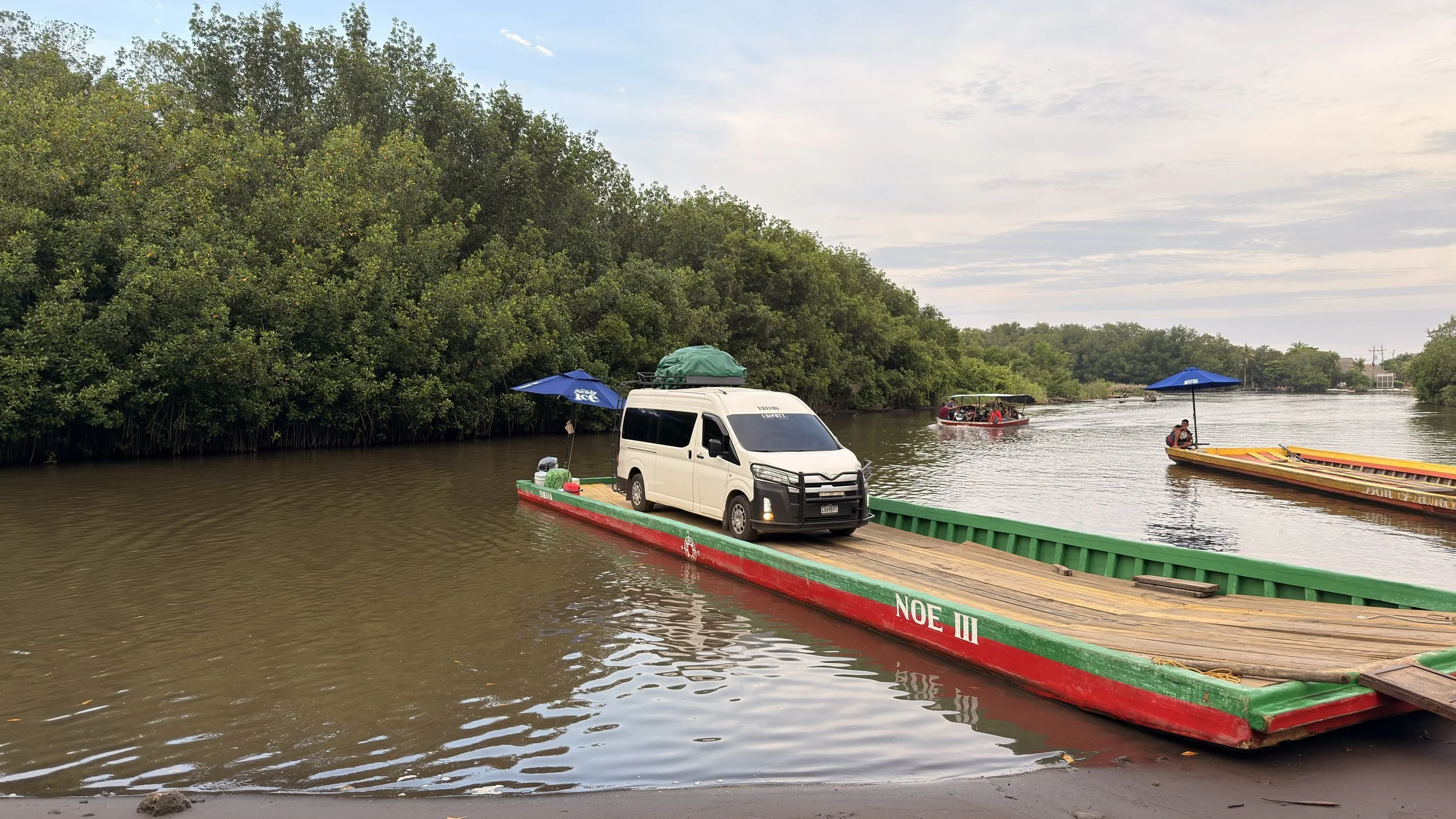
There is a first time for everything while traveling in Guatemala
Crossing a volcanic lake on a high-speed lancha, racking up eight hours in a shuttle van, and then driving that entire vehicle onto a wooden barge to float across a quiet mangrove lagoon just to reach the coast—what an absolute day of travel. Reaching the black sand of El Paredón isn't just a transit leg; it's a raw, multi-modal odyssey that makes you earn every single mile.
Day 8: Surf Town Heat, Flash Tattoos & The Pacific Storm
My first full day on the coast started exactly how you want it to in a surf town—slow. I spent the morning under the palapa roof, drinking coffee, knocking out some agency work on the laptop, chatting with the other bungalow guests, and taking a quick swim to cut through the heavy morning humidity before finally heading out.
It was a brutally hot, cloudless day. I walked down the sandy main strip to AfterSun, an Australian-owned healthy food spot that feels like an oasis in the dirt roads of El Paredón. I housed a massive chicken bowl and a smoothie packed with incredible flavor, and ended up having a long, honest conversation with the staff about what it’s actually like to live full-time in this rapidly growing, remote coastal town.
In the late afternoon, I walked the entire length of the town's dirt strip, eventually ending up on the beach just in time for sunset. I sat in the black sand and watched the chaotic, unfiltered ecosystem of the coast unfold: wild street dogs chasing each other through the surf, hostel crowds swimming in the heavy shorebreak, and hundreds of crabs emerging from their bunkers in the sand to scavenge the dead fish washed up along the tide line. It felt like my life back in La Saladita, Mexico.
I headed back to the Airbnb for another swim to wash the salt and sweat off, then headed back out into the dark for dinner at Salchipapas, a local spot serving up Colombian food. I grabbed a massive torta and some tacos, feeding my leftovers to a few of the neighborhood stray dogs that had gathered around my table.
As I started the dark walk back to the Airbnb, I passed an Asian restaurant that had a flash tattoo event that evening and spotted one of the couples from my neighboring bungalow inside. I stepped in to say hola and met the shop owner. That’s when the coastal weather flipped.
First came the wind—heavy and sudden. Then the rain hit sideways. Within minutes, the entire town's electrical grid went completely black.
We were trapped as the storm raged outside, so we hunkered down. Someone lit a single candle, and we spent the next few hours playing a Guatemalan, fully Spanish version of Cards Against Humanity, and listening to music until the speaker eventually died. It was the ultimate test of the Spanish I had been practicing, trying to translate dark humor by candlelight while the rain battered the tin roof.
By midnight, the storm had passed, though the power was still completely out across town. The three of us navigated the flooded, pitch-black dirt roads back to our bungalows. With no electricity—which meant no fans and no AC in the sweltering, post-rain coastal humidity—I headed straight to the outdoor shower, standing under the cold water in total darkness, just hoping to drop my core temperature enough to finally fall asleep.
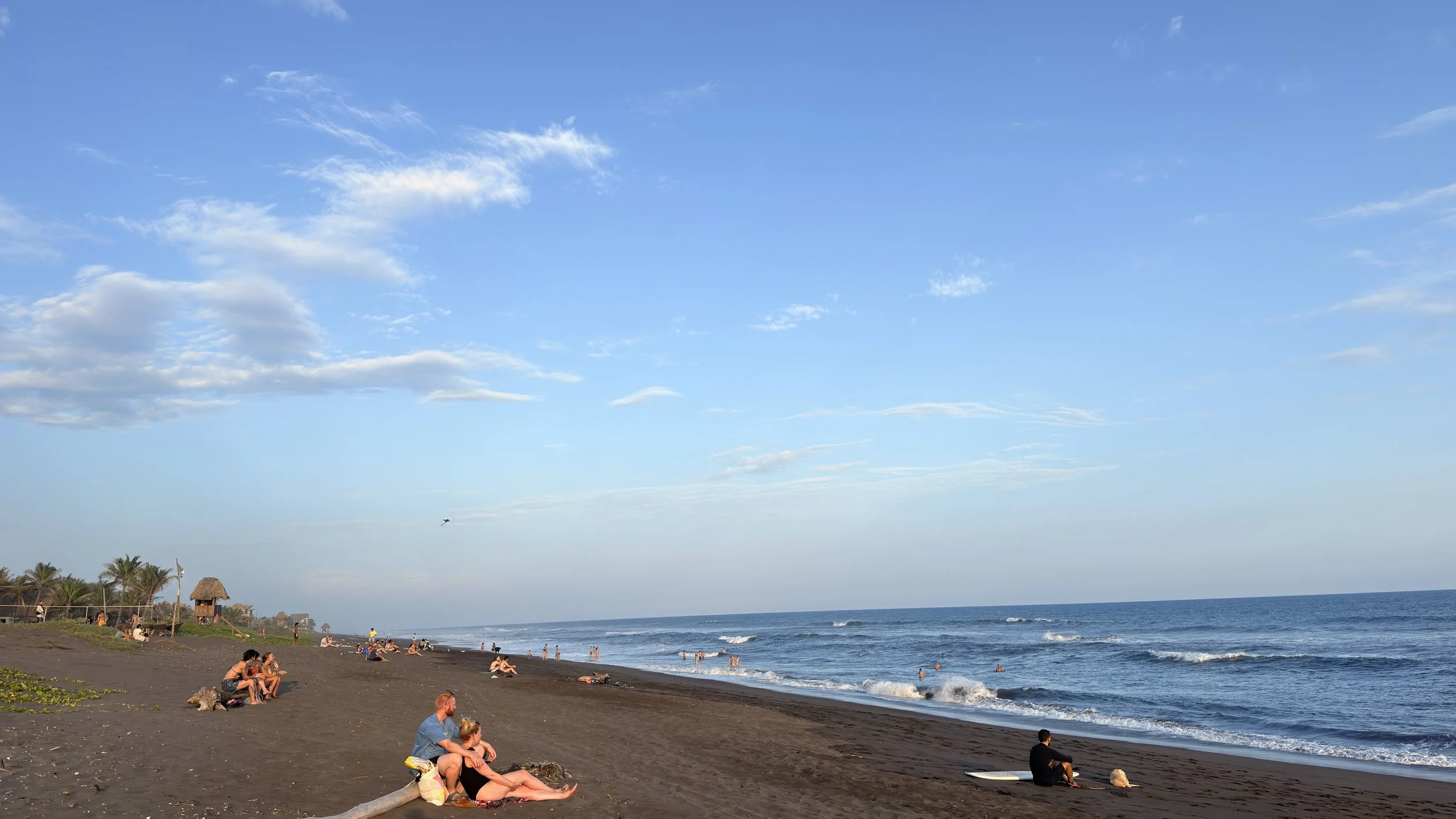
Swimming in El Paredón
While sunset swims are largely free from sharks and lagoon-bound crocodiles—with the nearshore surf primarily home to red snapper, snook, and sea turtles—the raw ocean conditions still demand extreme caution. The true safety hazard isn't the marine life, but rather the ferocious Pacific rip currents and pounding shorebreak that become increasingly treacherous as visibility drops at dusk.
Day 9: The Concrete Jungle - Guatemala City (Zona 4)
The final full day started before the sun. I booked an early shuttle through Bookaway (again, use my code GT7AXX to save some cash) with a pickup right at El Café de la Abuela.
The route back to the capital required a transfer in Antigua. It gave me just enough time to stretch my legs and grab a quick, high-quality pour-over at Cafece before grabbing my bags and piling into the next shuttle bound for Guatemala City.
Travel logistics rarely go perfectly, and my app started throwing errors when I tried to complete my online check-in for my Volaris flight home. Rather than leaving it to chance and risking a massive headache the next morning, I erred on the side of caution. I headed straight to La Aurora International Airport upon arriving in the city to handle the check-in process in person. It’s always better to kill the hassle early so you can actually enjoy your last night.
From the airport, I grabbed a quick Uber straight into Zona 4—the capital’s rapidly growing, highly walkable creative district. I checked into a modern, high-rise apartment with massive glass windows and sweeping views of the sprawling city below. It was a sharp, striking contrast to the dirt roads, hammocks, and palapa roofs of El Paredón.
Hungry and looking to explore, I asked a few locals for a solid dinner recommendation and was immediately pointed toward L'Aperó. It delivered perfectly: incredible, authentic Italian thin-crust pizza, cooked in a roaring wood-fired iron oven right in front of me.
With my stomach and heart full, I spent the rest of the evening walking the grid of Zona 4, taking in the street art, the heavy architecture, and the neon lights cutting through the city fog. After a complete, exhausting, and visually heavy trip across the country, I headed back to the apartment for a long hot shower and some hard-earned rest.
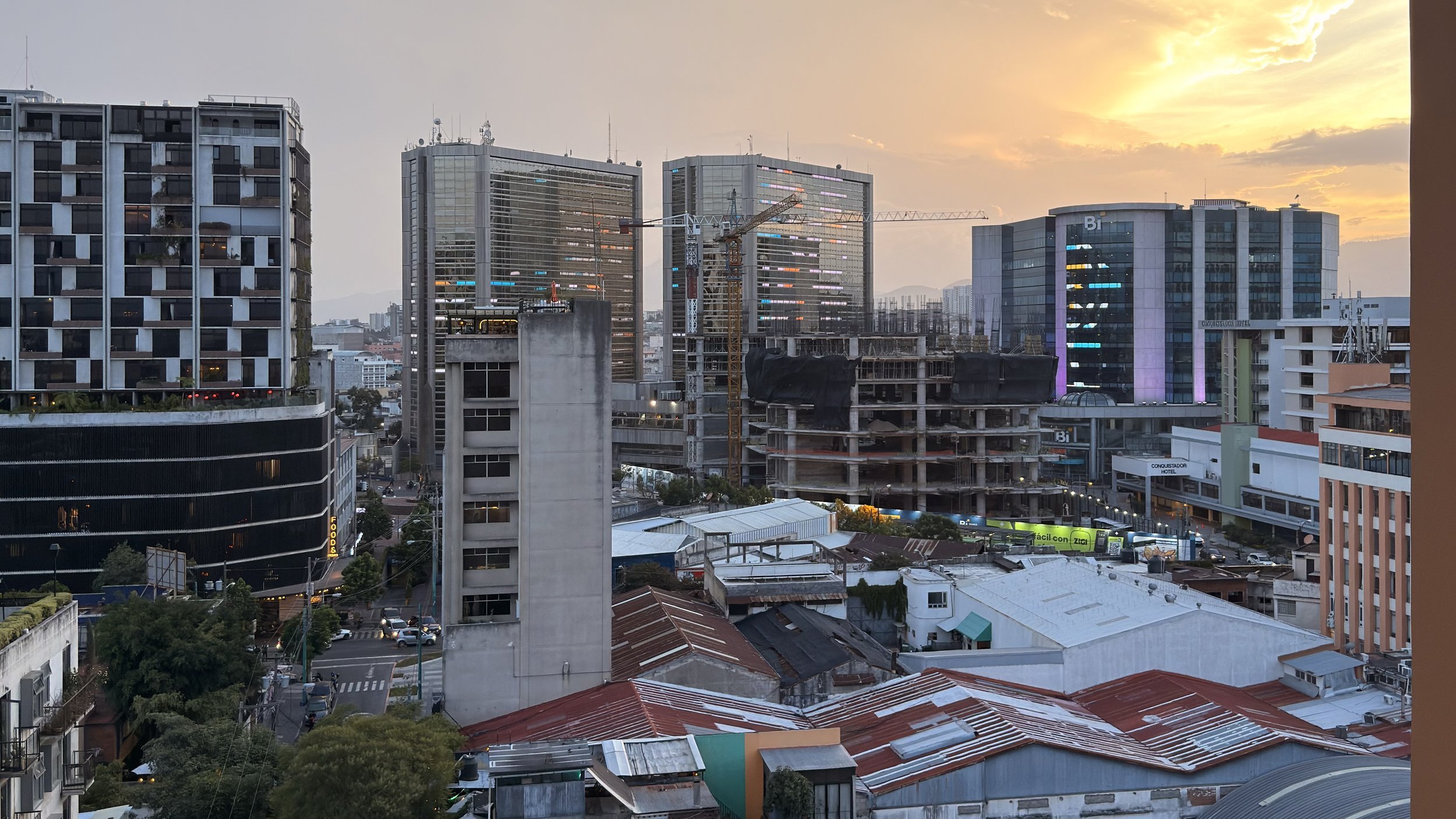
Guatemala City, Zona 4 - a safe, design-forward oasis
Often dubbed the creative heart and 'Brooklyn' of Guatemala City, Zona 4 is centered around the pedestrian-friendly Cuatro Grados Norte. It’s known for its striking street art murals, modern architecture, third-wave specialty coffee, and fine culinary scene.
Day 10: The Tijuana Plot Twist & The Journey Home
I was up before the sun for a quick ride to the airport to catch my Volaris flight to Mexico City, connecting straight into Tijuana. Instead of pushing straight across the border, I decided to book a room and stay one night in TJ. Why not?
The plan was a smooth transition home, but Tijuana had other plans.
Walking out of the airport into the usual crowd, the chaos started immediately. My first Uber pulled up and was instantly stolen by the "wrong passenger." When my second Uber finally arrived, another guy tried to slide right into the back seat. I had to physically grab the door handle and kindly let him know he was jumping into the wrong ride.
I finally made it to my hotel—a Hyatt I had booked using points. I walked up to the check-in desk, ready to crash, only to be told there was absolutely no hot water in the building. They discounted the points I used to book it to make up for the inconvenience, which was a solid win, but after a brutal travel day, a cold shower was the last thing I wanted.
Hungry and looking to salvage the night, I hit the streets. I grabbed some fresh bowls at Baja Poke and followed it up with some classic late-night street tacos. It was exactly what I was craving.
Then, the reality of travel hit back. I returned to the Hyatt room and was struck by a massive, violent wave of food poisoning—a brutal parting gift that would completely wipe me out for the next three days.
The next morning, before attempting the border, I managed to drag myself to a local farmacia to secure some heavy-duty Mexican medicine to literally save my life, along with a few bottles of Electrolitos. Running on absolutely zero energy, sheer willpower, and pharmacy meds, I rode the wave to the PedWest Garita Tijuana crossing. I walked across the border back into the US, and finally made it home.
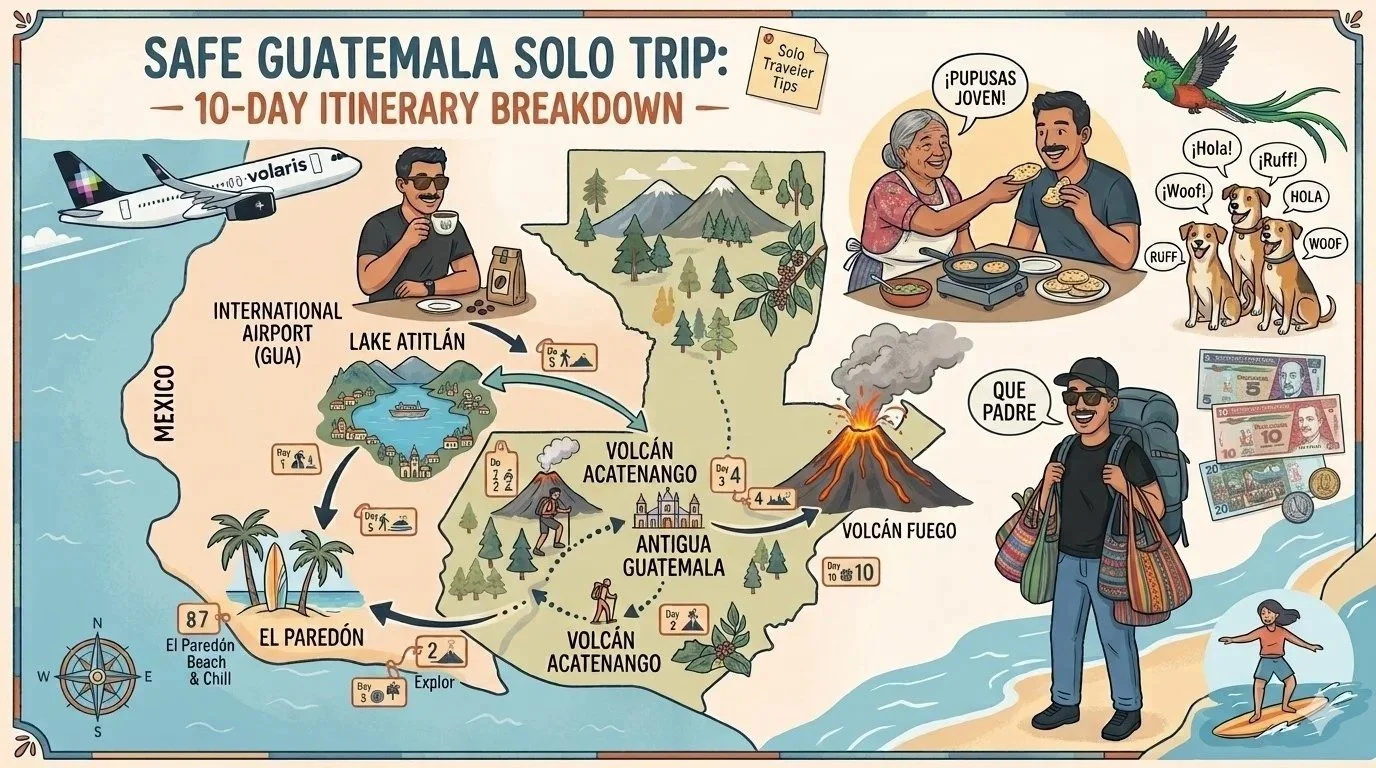
The 10-Day Itinerary Breakdown - Solo Guatemala Travel
Is 10 days enough time to experience an entire country like Guatemala? Yes and no. But if you wait until you have enough time to see every corner, you'll never leave at all. Take the PTO, pack the camera, and just go for it!
The Verdict: Is 10 Days Enough?
This trip was a complete reset. I checked an actively erupting volcano off the bucket list, documented a completely new country in Central America, and put my Spanish to the test in a way that actually forced me to blend in rather than stand out. Despite the chaotic, food-poisoning-laced exit through Tijuana, this route sparked a renewed sense of adventure and a deep reconnection to the raw, unfiltered solo traveling I loved for so many years. Frankly, I feel awake again, and more alive than before.
But is 10 days in Guatemala enough?
If you are trying to maximize a standard block of time off without burning out, absolutely. This itinerary pushes you through colonial cities, a massive physical summit, a volcanic crater lake, and the Pacific coast.
However, after having a few long chats with fellow travelers on the trail and diving into a few breakdown videos, I know exactly what I missed. If I had another five to seven days, I would have pushed straight into the northern region. I would base myself in Flores, the main gateway town, to explore the ancient Maya temples hidden deep within the vast tropical rainforest of Tikal National Park. From there, I'd make the rugged trek to Semuc Champey to swim in the tiered, gem-colored turquoise pools sitting over the natural limestone caves. That is an itinerary for the next trip.
I hope this breakdown gives you the exact tools you need to weekend-max your life. Stop waiting for the perfect time. Take the PTO. Book the flight. Hike the volcano. Return to the daily grind with epic photos and even greater memories.
Saludos,
Jorge
Full transparency: If you purchase anything through the links in this blog, I’ll earn a small commission at no extra cost to you. This allows me to keep sharing the value of my experiences for all to read, for free!
